RECEPTORS
A deep sensor for buzzes
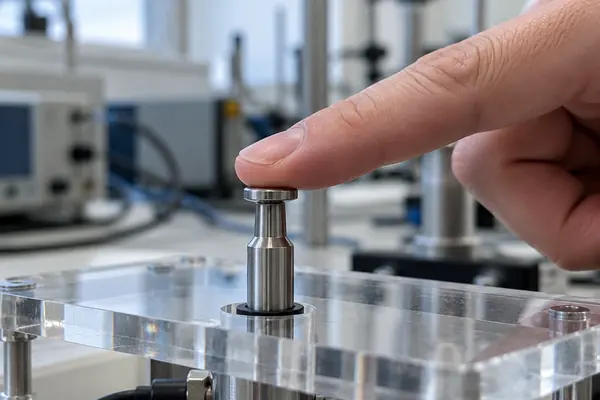
Of the skin's four main touch receptors, Pacinian corpuscles are mainly responsible for feeling vibration. They are most sensitive at around 250 Hz.
Meet all four
 touchweartech
THE SCIENCE OF HAPTICS
BUZZ felt, not heard
Watches, bands and phones talk to us through the skin.
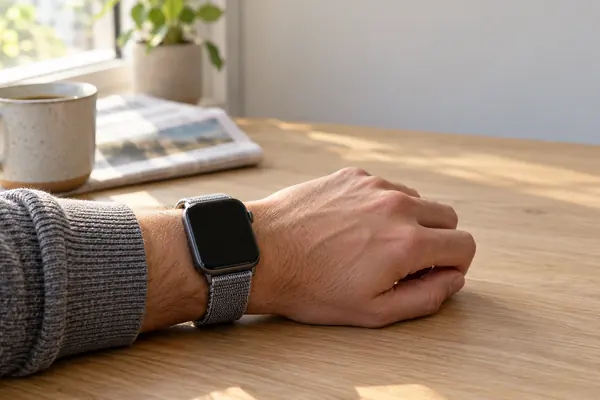
A short buzz on the wrist can say a message has arrived or a timer is done. It works because our skin carries receptors tuned to vibration, but how well we feel it depends on where it lands and what else we are doing.
Updated
Meet the receptorsTHE SHORT ANSWER
Deep receptors pick up the buzz.
Where it lands and what you are doing change how well.
RECEPTORS
Of the skin's four main touch receptors, Pacinian corpuscles are mainly responsible for feeling vibration. They are most sensitive at around 250 Hz.
Meet all fourBODY SITE
In a University of Sydney study of 44 adults, the fingertip was the most sensitive place to feel vibration for at least 40 of them. The forearm needed a much stronger buzz.
See the numbersON THE MOVE
A Stanford study of 23 people found that walking and a memory task both raised the strength a phone vibration needed before people noticed it.
What it meansMEET THE RECEPTORS
Pick one of the skin's four main touch receptors to see what it senses best and the vibration range it responds to. The bar shows how much it matters for feeling a device's buzz.
Frequency ranges are those given in a 2017 review of tactile actuators; real sensitivity varies from person to person and from place to place on the body.
TWO NUMBERS WORTH KNOWING
One figure on the body,
one on a busy mind.
13.8 vs 23.2 dB
Detection threshold, young adults
Lower means more sensitive. In the University of Sydney study the fingertip of young adults detected 200 Hz vibration at 13.80 dB, the forearm only at 23.20 dB (dB re 1 µm movement).
FINGERTIP VS FOREARM · 200 HZ
0.66 → 0.83 s
Average time to notice a buzz
People felt and responded to phone vibrations in 0.662 s on average when sitting with no task, and 0.825 s when walking while doing a memory task.
RESPONSE TIME · STANFORD 2023
The same Sydney study found that adults aged 55 to 90 needed stronger vibration than adults aged 17 to 27 at every site tested except the fingertip.
FOUR THINGS THE RESEARCH SUGGESTS

None of this needs new gadgets. It explains everyday moments, like missing a notification on a walk, and what designers of wearables try to work around.
Walking raised the vibration strength people needed before they noticed it, so a buzz that is clear at a desk can slip by on the street.
A memory task raised thresholds and slowed responses. People were slowest, 0.825 s against 0.662 s, when walking and doing the task together.
In a wristband test with four motors, 12 people told five vibration patterns apart with about 90% accuracy in the lab and outdoors, except one circular pattern outside.
The 2017 review notes that people can tell apart pulses only 5 ms apart by touch, compared with about 25 ms for vision.
INSIDE THE DEVICE
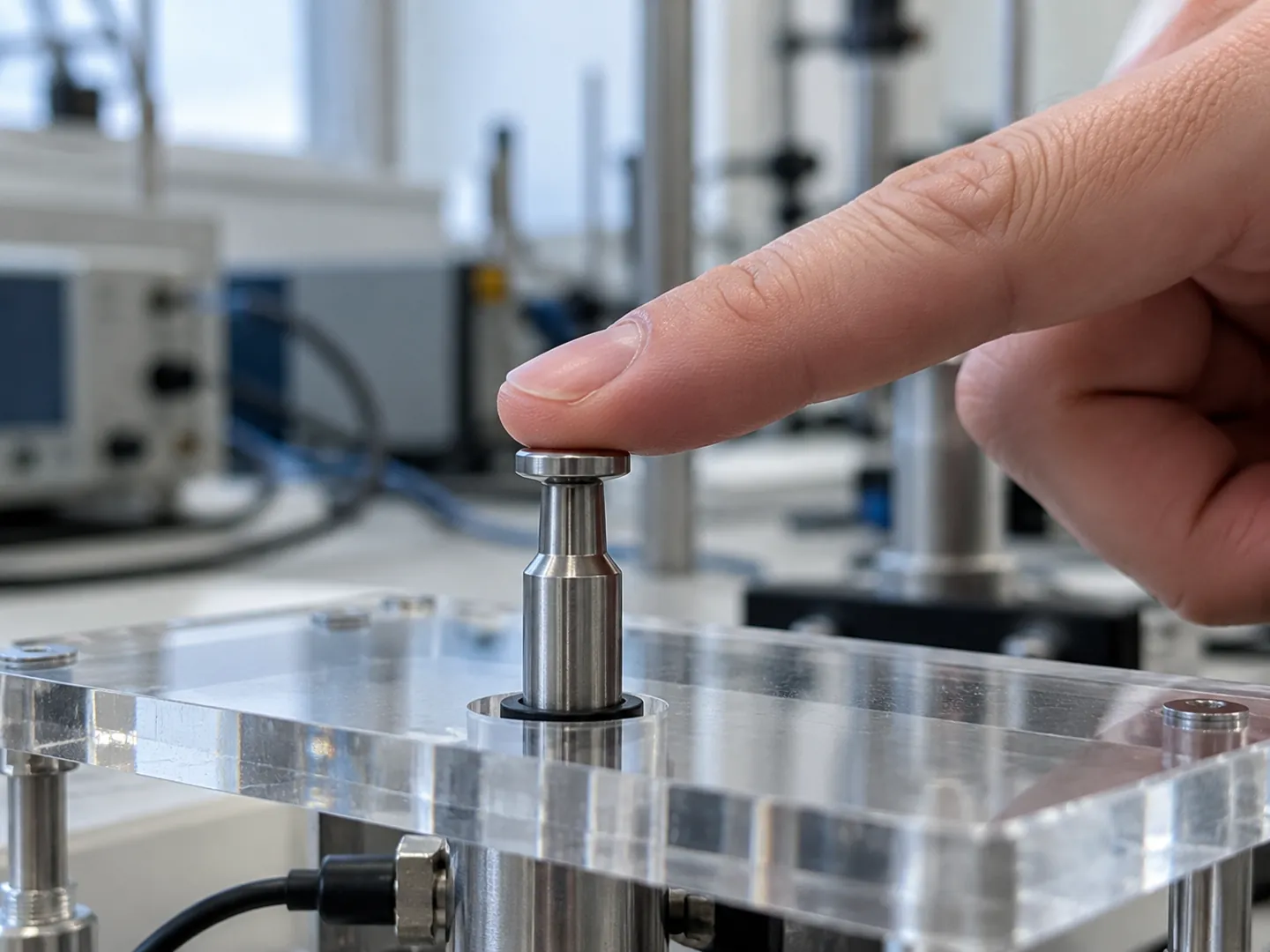
Toys and game controllers most often buzz with a small motor that spins an off-centre weight. It is cheap and strong, but it takes tens of milliseconds to get going and cannot point the vibration in a direction.
Phones often use a linear actuator instead: a coil pushes and pulls a magnet back and forth. It reacts faster than a spinning motor but only works well at the resonance frequency it was built for.
Questions
Mainly Pacinian corpuscles, deep, fast-adapting receptors that respond from about 60 to 400 Hz and are most sensitive around 250 Hz. Meissner's corpuscles near the surface handle lower-frequency flutter.
Hairless skin such as the fingertip has a high density of touch receptors. In a University of Sydney study, the fingertip was the most sensitive site for vibration in a substantial majority of the 44 adults tested.
In a 23-person Stanford study, walking on a treadmill raised the vibration strength needed for people to notice a phone buzz. A memory task raised it too and also slowed response times.
In the Sydney study, adults aged 55 to 90 needed stronger vibration than adults aged 17 to 27 at the forearm, shoulder and cheek, but the fingertip showed no significant difference.
Usually with either a small motor spinning an off-centre weight or a linear actuator, where a coil moves a magnet back and forth. The linear type responds faster but works best at one resonance frequency.
Sources
ABOUT THIS NAME
touchweartech.com is part of the DoodleSale portfolio. It isn't in an auction right now, but you can ask about leasing it.